Some time ago I got a friend request on Facebook from Clarice Limit, a name I didn't recognize. So I checked to see if we had any friends in common. Sort of…
Sunday, March 22, 2015
Thursday, January 29, 2015
Tuesday, November 11, 2014
Friday, October 10, 2014
Tuesday, September 02, 2014
ron reed | the great canadian poem
Ashes Are Butterfly Bones Made Of Light And Dust:
God's Bones in their Wings
for Peter Norman
His bones are light,
(radiant, bone-barred):
Even the smallest bone in his inner ear, the bone chapel—
bone etchings,
bone song,
bone dance,
bone dream,
bone silence.
Old momma teach me nerve ends
made of juniper and bone,
bear bones and feathers,
bread and not bone;
the bone broker.
Here is a bone resembling a word;
milk tooth bane bone
seed-bone and hammer.
When the bone fragments arc to earth
the bone's song will be pulled,
descending to my ankle-bones.
The wind picks up the dust from the ashes,
the white of bone;
your bone, Morgan's bones, lean and boneless,
the jazz-loosened loose bone thing he is.
We will have only bones to hold;
the bone ash of
a red herring-bone skirt clasped with a bone button
buried among femurs and knuckle bones
where the bones of the child are hid.
The stone’s praise
for the sparrow’s ankle bone
rising like a frozen flood
of stone bone birds on the wing singing.
I'm chilled clean through to the bone.
by Ron Reed
with Margaret Avison, Leonard Cohen, Joy Kagawa, Lorna Crozier, Lorne Daniel, Daniela Elza, Moira MacDougall, Michael McAloran, Cassidy McFadzean, Kath MacLean, Jill Battson, Joe Blades, Louise Halfe, Ben Ladouceur, Dennis Lee, Christine Murray, Carol Shillibeer, Anne Simpson, Elizabeth Zetlin, and Robert W. Service
*
What the critics are saying;
"Cuts to the bone and then into the bone, to find the marrow." Turtle Island Native Network
"Most of all it’s felt experience, what’s close to the bone – feelings, emotions, combined with a sense of craft." Cyril Dabydeen
"The poem does not hang straggled and bone-whitened like rags in the bleaching sun. His engagement is with a burned and ruined corpse left out to dry and fossilize with its rag-remnant of torn flesh and chilled bone, an empty jaw-bone, a leaving from a physical life. Here is a victory-song for life pushing up through human-remains, detritus, stink and bone." Bone Orchard Poetry
Friday, August 08, 2014
Sunday, May 11, 2014
may 11, 1926 | tolkien + lewis meet
Eighty-eight years ago today, J.R.R. Tolkien and C.S. Lewis
met.
The English Faculty meeting began at 4:00, May 11, 1926 at
Merton College, Oxford. The previous year, Tolkien had been appointed Professor of Anglo-Saxon at Pembroke College, and Lewis
had been elected a Fellow and Tutor in English Language and Literature at Magdalen
College.
It was heady stuff; a proposal to
co-ordinate lecture schedules with tutorials, the need for lessons in
pronunciation and beginners' outlines of literature. Lewis wrote in his journal
that "Tolkien managed to get the discussion round to the proposed English
Preliminary examination."
The two men spoke after the
meeting. "He is a smooth, pale, fluent little chap – can't read Spenser
[Lewis' favourite author] because of the forms.... Thinks all literature is
written for the amusement of men between thirty and forty.... No harm in him:
only needs a smack or two."
Before long, Lewis was attending
"The Coalbiters," a weekly study group Tolkien had initiated earlier
in the year to read aloud from Icelandic sagas and myths in the original
languages – something of a precursor to the Inklings, I suppose. A year later
Lewis wrote to his friend Arthur Greeves, "We have so far read the Younger
Edda and the Volsung Saga: next term we shall read the Laxdale Saga. You will
be able to imagine what a delight this is to me, and how, even in turning over
the pages of my Icelandic Dictionary, the mere name of god or giant catching my
eye will sometimes throw me back fifteen years into a wild dream of northern
skies and Valkyrie music." This experience of "northernness" was
at the centre of Lewis' spiritual longing – the "joy" in his
spiritual autobiography "Surprised By Joy" – which flowered into
faith between 1929 and 1931, Tolkien playing a critical role.
Tolkien's passion for Nordic myth
fueled a mostly secret project, the creation of complete histories, languages
and geographies of the world which eventually became the setting of his Middle
Earth stories. The summer of 1926 – within months of meeting Lewis – is the
earliest possible occasion on which Tolkien may have scrawled the words
"In a hole in the ground there lived a hobbit" on the back of a
student examination paper, though it is more likely to have been two or three
years later. By November 1929 the two men were meeting together regularly,
talking well past midnight about "the gods and giants of
Asgard." On December 6, 1929,
Lewis read Tolkien's "Lay of Leithien," the essential story of The
Silmarillion – perhaps the first Middle Earth story Tolkien shared.
In February 1933, Lewis read the
mostly complete first draft of The Hobbit, and it is likely that The Inklings
were begun in the fall of that year. By December, Lewis's brother Warnie writes
in his journal that he sees less and less of his brother every day because of
the friendship with Tolkien.
Because Tolkien's journals are not
readily available to scholars, we don't know that date of the following entry,
but likely soon after the famous Addison's Walk conversation of September
19, 1931. "Friendship with Lewis compensates for much, and besides giving
constant pleasure and comfort has done me much good from the contact with a man
at once honest, brave, intellectual - a scholar, a poet, and a philosopher -
and a lover, at least after a long pilgrimage, of Our Lord."
Wednesday, April 23, 2014
robert farrar capon | apostate from the religions of health
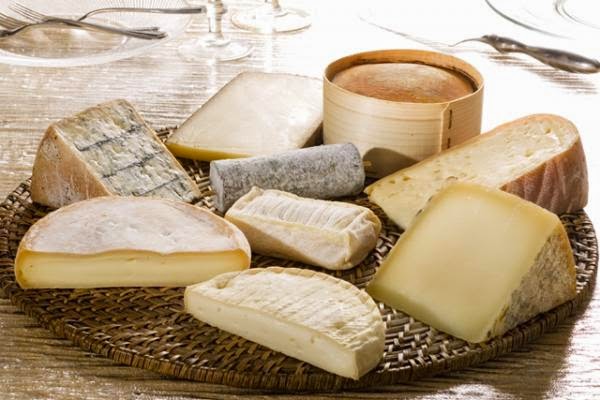
"Isn’t it true that the eating habits of most Americans are killing them?”
My answer is no. People die because the human race is mortal. What they eat may cause them to die sooner (much sooner if they eat strychnine; less soon, perhaps – barring plane crashes – if they eat Hollandaise sauce). But in any case, some time before they reach the age of 120, they will die; and no religion of eating, however perfectly obeyed, will make the slightest difference in that.
Therefore, the last secret of the cult of nutrition – the mystery to be guarded at all costs – is that the implicit promise of immortality (which is the principal selling point of the whole religion) is bunk. The idol in the innermost sanctum doesn’t just have no clothes on; it is even there. But the faithful must scrupulously avoid facing that fact. The one question they must never ask is whether indefinitely on a diet of tofu and organically grown green leaves–without even salt to perk it up, or wine to wash it down, or a nice smoke to top it off–even vaguely resembles living as the human race in its earthly wisdom has defined it.
That, you see, is the big question. And on that, I am one hundred percent apostate from all the religions of health. I am simply tired of uplift, whether at the table, in the armchair, or anywhere else. I am sick of all the pious types who gasp when they watch salt a dish on the stove or put butter and cream in mashed potatoes, or leave a respectable amount of fat on my pork chops when I smother them with onions. I am mortally insulted by snide signs thanking me for not smoking. And I flatly refuse to believe that well-being is in any way furthered by ill-living.
Oh, I know. You want me to qualify all that. You want me to write a paragraph on moderation – or at least a sentence that makes a bow to religion of health – by calling the things I enjoy my “vices.” Or by referring to my smoke-shrouded end of the dinner table as “the sinner’s corner.” But I won’t. A moderate life to me, is about as exciting as a moderate love affair, or a moderate marriage, or a moderate banana split. I want a terrific life. So you write the paragraph yourself, and let me get on with my immoderate pursuit of happiness.
The net result of the religions of food is non-cooking, non-dining, and non-living.
from
Health, Money and Love (and Why We Don’t Enjoy Them)
by Robert Farrar Capon
Tuesday, April 22, 2014
richard klein | eating like a frenchman
Richard Klein first started coming to Paris as a teenager from a small town in Pennsylvania, and has essentially constructed an entire life around the feeling that he got in Paris. He went on to become a scholar and a professor in the Romance Studies Department at Cornell University, author of several books, Eat Fat and Cigarettes Are Sublime, which are deeply suffused with a sensibility that is partly just un-American, or anyway, semi-Parisian, a sensibility that is all about the small pleasures of everyday life.
Richard Klein: "You know, the French have a much more uncomplicated and much less guilty relationship to their body, beginning with eating, not only the way they eat, but the pleasure that they take in eating. I mean, the American notion that food is medicine, for example, is totally repulsive to the French. And yet, increasingly in America, that's all you hear. I mean, people eat only as a function of what they think is good for them. And nobody in France would eat strictly as a function of what was good for them."
from This American Life 165: Americans In Paris
Friday, February 07, 2014
Thursday, February 06, 2014
photos | measure for measure out-takes 2
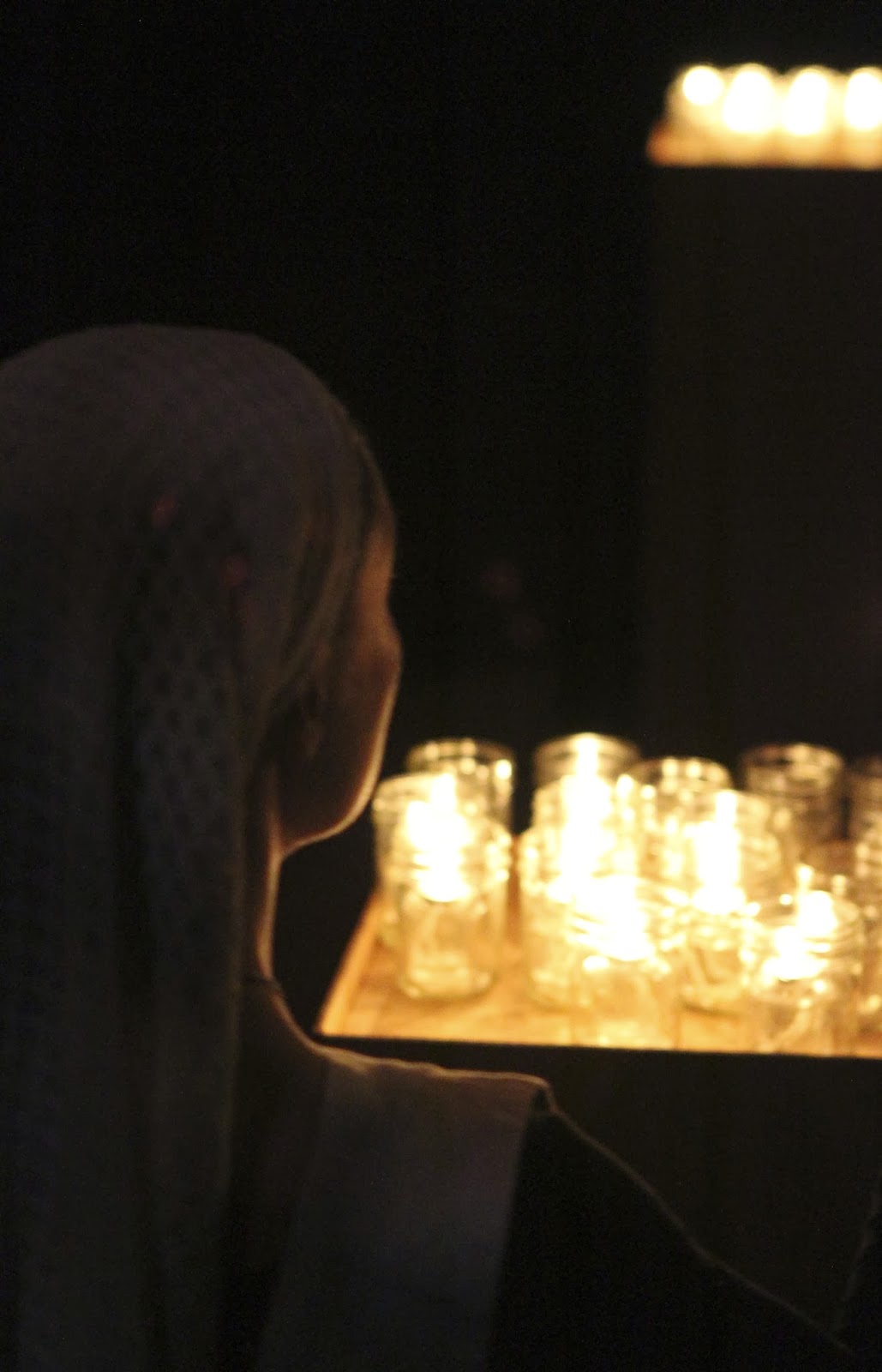
The Honest Fishmongers' production at Pacific Theatre features tons of scenes in gorgeous low light, and candle light - which means the photo shoot yielded many pictures that aren't much use for the usual promotional purposes. But I quite like a lot of the discards, so I'll post some of my favourite "not ready for prime time" images from the show.
Subscribe to:
Posts (Atom)


.jpeg)