Friday, July 22, 2022

lauren groff on flannery o'connor


In some ways, I’m a Southern writer (though not exclusively one), and I think it’d be impossible to be any kind of Southern writer writing about the nineteen-fifties without thinking of Flannery O'Connor.
 I have a deeply complicated relationship with her work; though I do feel in conversation with it, it’s not always a civil conversation. Sometimes, it’s a blistering argument. I love so much about O’Connor—her wit, her daggers, her fury—and, at the same time, I also find her brand of Catholicism hard to take, or maybe internally incongruent, since her stories read to me as if she actually ascribes to the Calvinist idea of double predestination, that God has already decided who will be saved and who will be damned. I get the impression that she sees nearly everyone as already damned, which strikes me as both cynical and fundamentally untrue. I love human beings enough to trust that they will try to do their best, and will always be disappointed when their worst selves take over. I think we’re all equally saved and damned, and all of our dark and light angels wrestle ceaselessly, and there will never be a clear winner even at the moment of death. In the case of some artists, those same angels will keep wrestling in the work after death, as long as there is an audience to witness it.

the new yorker, july 4, 2022
conversation about her short story To Sunland

Tuesday, July 19, 2022

tim klein | the mercy-go-round


tim klein

ian frazier | bullshit detector


I do not have a bullshit detector. I used to have one, but I don’t even know where it is anymore—maybe out in the garage. It was an awkward thing, like one of those little roll-aboard briefcases, but made of bright-orange high-impact plastic, and it didn’t work very well. It was O.K. on ordinary, everyday bullshit, but it could not detect cant. It was also not too reliable on sanctimony or pomposity, and only so-so on hypocrisy. Supposedly, it could puncture self-importance, but I could never get that feature to turn on. Over all, the detector was more trouble than it was worth, so I quit using it.

I read recently about someone who had a “built-in” bullshit detector! I am completely unable to picture how that might work, but, then, I would not be the person to ask. Kids, I’m told, have built-in bullshit detectors, so maybe you need to be young. Like a lot of older consumers, I have not kept up on the technology. 

Living without a bullshit detector can be peaceful and relaxing. As you know, there is a lot of bullshit out there, and I got sick of having the alarm go off all the time. On the other hand, I do feel a need for the ol’ detector occasionally.

etc...

Ian Frazier
The New Yorker | May 30, 2022

Sunday, July 10, 2022

tomas transtromer | allegro


After a black day, I play Haydn,

and feel a little warmth in my hands.


The keys are ready.  Kind hammers fall.

The sound is spirited, green, and full of silence.


The sound says that freedom exists

and someone pays no taxes to Caesar.


I shove my hands in my hadynpockets

and act like a man who is calm about it all.


I raise my haydnflag.  The signal is:

"We do not surrender.  But want peace."


The music is a house of glass standing on a slope;

rocks are flying, rocks are rolling.


The rocks roll straight through the house

but every pane of glass is still whole.


by Tomas Transtromer

tr Robert Bly

Friday, July 08, 2022

tomas transtromer | the scattered congregation`


I.
We got ready and showed our home.
The visitor thought: you live well.
The slum must be inside you.

II.
Inside the church, pillars and vaulting
white as plaster, like the cast
around the broken arm of faith.

III.
Inside the church there's a begging bowl
that slowly lifts from the floor
and floats along the pews.

IV.
But the church bells have gone underground.
They're hanging in the sewage pipes.
Whenever we take a step, they ring.

V.
Nicodemus the sleepwalker is on his way
to the Address.  Who's got the Address?
Don't know.  But that's where we're going.


tr. Robert Bly

Monday, July 04, 2022

john shaw | for the 4th of july


We ate the flag,

a cheese cake one with

berry stripes, sweet 

after the tangy barbeque and the bite of beer.

But all night long we burped up stars

bursting like fireworks

in the black bedroom.


I lie awake in the night

wondering why we celebrate our country?


Back on childhood’s Western Avenue,

the rows of corn stand knee-high next to the freeway.

In Summer’s thumping heat,

I had swimming lessons in the blue village pool.

My sister hung me out the upstairs window.


JFK turns to his side, in a car,

and dies. We rent a TV to see

the funeral, my father standing

on the linoleum

when they play the star spangled.


We are on holiday at Cape Cod,

and a shirt-ful of steamers

is set for boiling and bowls of butter.


My father took me to Chicago in the train,

and we rode in an elevator

to his desk in the sky-

scraper, and sat me in his leather chair

with my legs hanging down.


Later, Martin Luther King Jr. leans on a railing

holding the bullets inside,

but no one told me. 

None of us stood up for him. 


Nor did I understand my childhood’s war

in the other world

of bamboo and napalm, and the color

of the cake was agent orange

and there was so little sweetness.


2


And how we slid from being 

an engine in the world, 

full of zest and freshness, 

to this fat self-interest. 

How greed waxed, and joy waned,

until history was just trotted out

once a year to justify guns, or fresh excess.


How squabbles were fanned into fires

and we lost the union, consumed for 

short profits and the gratification

of a few.


When our collapse came

we barely noticed:

we were bickering like spoilt kids

as the car left the asphalt, 

The tires shuddering in the air.

As we tumble, 

I wonder, 

Are the words that choke us 

grateful to be free of us at last,

so that life, liberty, and the pursuit

of happiness

can find new throats, 

new champions with less 

avarice and more need?

Saturday, July 02, 2022

Saturday, June 25, 2022

photo: rapture, 1985


This photo was taken by John Tlumacki on an unusually warm day in Boston in 1985.  It is the only known documentation of the Rapture.  Apparently these Christians were out walking on the water when, to their surprise, a trumpet sounded and they found themselves heaven-bound.  

susan orlean | obsessions


"John Laroche is a tall guy, skinny as a stick, pale-eyed, slouch-shouldered, and sharply handsome, in spite of the fact that he is missing all his front teeth. He has the posture of al dente spaghetti and the nervous intensity of someone who plays a lot of video games. Laroche is thirty-six years old....

"Laroche strikes many peole as eccentric. The Seminoles, for instance, have two nicknames for him: Troublemaker and Crazy White Man. Once, when Laroche was telling me about his childhood, he remarked, "Booy, I sure was a weird little kid." For as long as he can remember he has been exceptionally passionate and driven. When he was about nine or ten, his parents said he could pick out a pet. He decided to get a little turtle. Then he asked for ten more little turtles. Then he decided he wanted to breed the turtles, then started selling turtles to other kids, and then he could think of nothing but turtles and then then decided his life wasn’t worth living unless he acquired one of every single turtle species known to mankind, including one of those sofa-sized tortoises from the Galapagos. Then, out of the blue, he fell out of love with turtles and fell madly in love with Ice Age fossils. He collected them, sold them, declared that he lived for them, then abandoned them for something else – lapidary I think – then he abandoned lapidary and became obsessed with collecting and resilvering old mirrors. Laroche's passions arrived unannounced and ended explosively, like car bombs."


Sunday, June 12, 2022

uta hagen | respect for acting


I called the book Respect for Acting for a very clear reason. I did not call the book Delight in Acting or Love of Acting or The Fun of Acting. I called that book what I called that book because of the shocking lack of respect that was creeping into both the teaching and the practicing of acting. Now? Forget it. We have allowed so much to recede or languish that I don't know what I could call a book today. Demand for Acting might work. ... 

There was a time when people became bored and they took up bridge or golf; ladies had an affair or had their hair rinsed and joined a book club. Now they want to act. And there are fools with no standards who allow them into classes and theatre groups and tell them to live their dream. I don't care about dreams. I care about work and responsibility and truth and commitment. You can see how old-fashioned I am. 

When you are bored or depressed, you might be advised to visit a museum, to look at the art. You are not, typically, advised to pick up a brush and become a painter. It is understood that this is a rare gift, and foolish to presume it might be yours. If your soul is crushed, it might be suggested that you listen to classical music or submit to opera. It is not suggested that you audition for the Metropolitan Opera, or even your local, provincial opera company. You haven't had the training. But acting? All you need, it seems, is the dream, and there are doors--doors that once meant something and once housed some standards behind them--that fly open and embrace you. And it enrages me. 

If there is some small society that calls itself amateur or community or whatever, and they want to get up and do plays, that is fine. I'll contribute money and I'll support you in the joys of understanding plays, but do not call yourself an actor. Do not think that your dream is similar in weight or meaning to the years of training and commitment that I and all the many actors whose work I love and respect and envy have invested in this art. Respect what is an art. It is not a pastime, and it is not something to get you through a bad time, and it is not something that should be taught to everyone with a dream. The term seriousness of purpose comes to mind. Apparently, only mine.

Uta Hagen, Interview with James Grissom (1996)

Saturday, June 11, 2022

baseball all-"americans"


In the nineties, a Japanese game designer had to make up "American" names for the players. 

Sleve McDichael
Onson Sweemey
Darryl Archideld
Anatoli Smorin
Rey McSriff
Glenallen Mixon
Mario McAlwain
Raul Chamgerlain
Kevin Nogilny
Tony Smehrik
Bobson Dugnutt
Willie Dustice
Jeromy Gride
Scott Dourque
Shown Furcotte
Dean Wesrey
Mike Truk
Dwigt Rortugal
Tim Sandaele
Karl Danleton
Mike Sernandez
Todd Bonzalez


Sunday, June 05, 2022

uehara konen | dotonbori


"Dotonbori" 
1928 (woodblock print)
Uehara Konen (Japan, 1878-1940)

annie dillard | living like weasels


Once, says Ernest Thompson Seton - once, a man shot an eagle out of the sky. He examined the eagle and found the dry skull of a weasel fixed by the jaws to his throat. The supposition is that the eagle had pounced on the weasel and the weasel swiveled and bit as instinct taught him, tooth to neck, and nearly won. I would like to have seen that eagle from the air a few weeks or months before he was shot: was the whole weasel still attached to his feathered throat, a fur pendant? Or did the eagle eat what he could reach, gutting the living weasel with his talons before his breast, bending his beak, cleaning the beautiful airborne bones?

We can live any way we want. People take vows of poverty, chastity, and obedience - even of silence - by choice. The thing is to stalk your calling in a certain skilled and supple way, to locate the most tender and live spot and plug into that pulse. This is yielding, not fighting. A weasel doesn't "attack" anything; a weasel lives as he's meant to, yielding at every moment to the perfect freedom of single necessity.

I think it would be well, and proper, and obedient, and pure, to grasp your one necessity and not let it go, to dangle from it limp wherever it takes you. Then even death, where you're going no matter how you live, cannot you part. Seize it and let it seize you up aloft even, till your eyes burn out and rop; let your musky flesh fall off in shreds, and let your very bones unhinge and scatter, loosened over fields, over fields and woods, lightly, thoughtless, from any height at all, from as high as eagles.

from Teaching A Stone To Talk

Thursday, June 02, 2022

tad friend | no pictures!


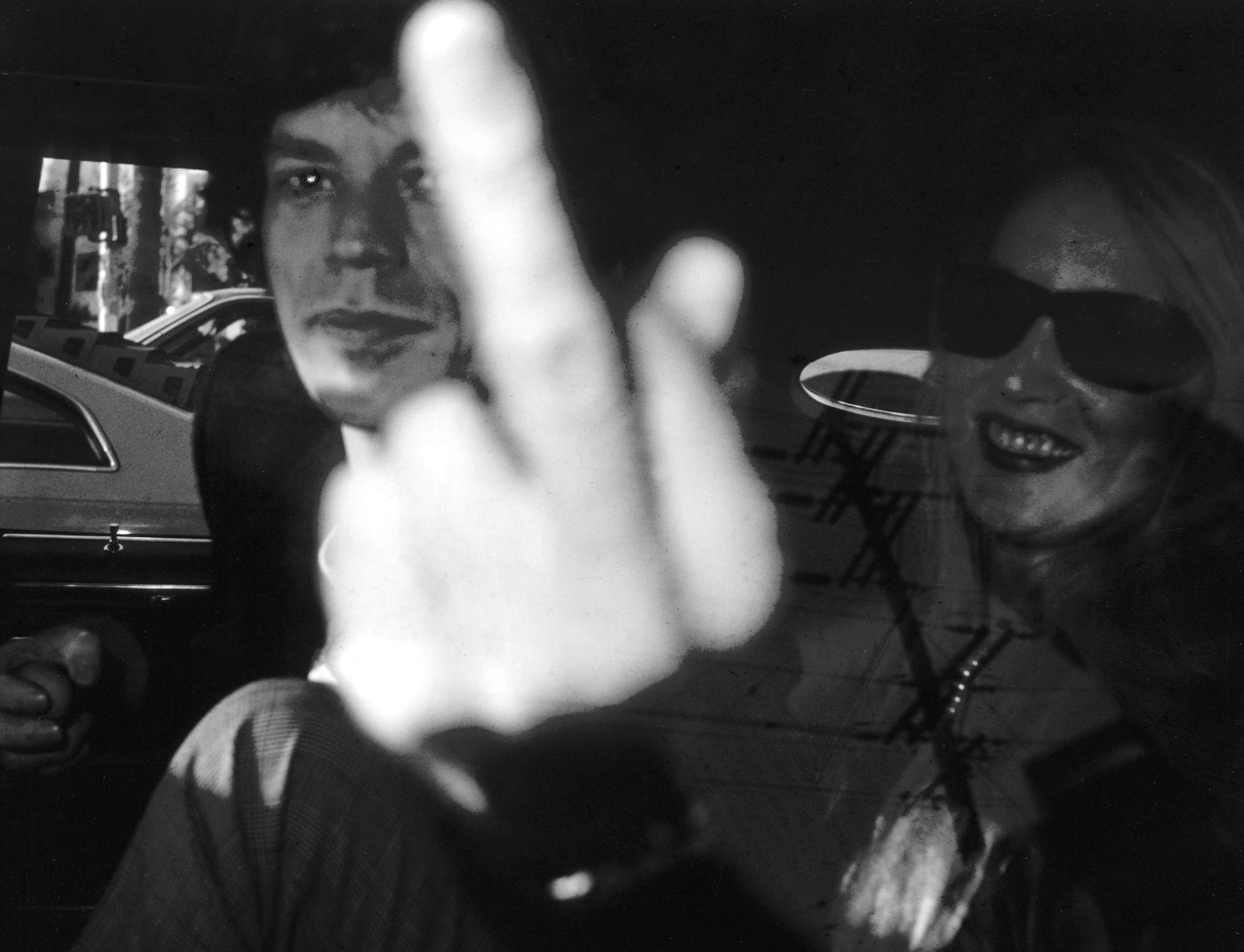
Ron Galella’s assignations with movie stars were legion. For decades, Galella was the world’s leading paparazzo, a tireless stalker with an Elmer Fudd laugh, so it was only natural that, when he jumped from behind a post with his Nikon flashing, the stars would respond to him. Often, they’d beckon coyly with a middle finger, or send over a bodyguard to suggest a tension-relieving service that he could perform upon himself. Yet melancholy suffuses any brief rendezvous, and the titles on the Kodak boxes of photographs in the basement of Galella’s white brick villa in Montville, New Jersey, tell a tale of serial disenchantment: “The Gabors, No Zsa Zsa”; “Marlo & Danny Thomas, No Phil”; “Marilyn Monroe Look-A-Likes”; “Anthony Quinn Alone.”

Only one relationship truly satisfied: his liaison with Jacqueline Kennedy Onassis. Last week, Galella, who is seventy-nine, sat in what he calls his great room, dressed in black, and reminisced. Above him was a framed “Windblown Jackie,” his favorite shot of Onassis, snapped from the back of a taxi. “I was a bachelor until I met my wife at the ‘Superman’ première at the Kennedy Center with Christopher Reeve, in 1978,” he explained. “So for a long time Jackie was my girlfriend—I lived in the Bronx, and it was a big adventure to go into the city to stake her out. She was soft-voiced and mysterious and a great subject, because she didn’t stop and pose; she kept on moving, jogging away, ducking into restaurants.”

He continued, “The only time Jackie touched me, she was at the 21 Club, and she came out and grabbed my wrist and said”—his foghorn voice whispered—“‘You’ve been hunting me for three months now.’ She loved being pursued.” Some of her other endearments included, “You stay away from me!” and “I thought you were in jail!” Galella mused, “I think I brought out her beauty from within, an emotion revealed, usually surprise. I really put her on a pedestal. The only way she disappointed me was with the court battles.” First, Onassis won a verdict that required Galella to maintain a distance of fifty yards, and later, in a settlement after he had repeatedly violated that order, he agreed to stop photographing her altogether.

In a documentary about Galella, “Smash His Camera,” which premières on HBO next month, several observers say that he had no distinctive style. But, as Galella sifted through his trophy shots, he pointed out the aesthetic hallmarks: “When there’s two people, you focus on one. Like, with a bride and groom, the bride should be looking at the camera, the groom at the bride.” By way of example, he held up a “Love Story”-era photo of Ryan O’Neal and Ali McGraw, who wore a startled smile and, most noticeably, no bra. “Also her titties are showing, so that’s a good composition,” he added.

He pulled out a 1974 shot of Robert Redford striding away from his car. “Then there’s the bull’s-eye picture—a profile shot where you feature the better eye, the strong eye that holds your gaze, at the center. His is the right eye.” Redford was wearing mirrored shades, and his left eye was the centered one, but, still.

“My other technique is to shoot fast without permission,” he went on. “That way, I get the startled look. When I shot Farrah Fawcett’s baby, Edmond, or whatever the name was”—Redmond—“the baby was coöperative, the baby was into it, but Farrah got angry, so I honored her wishes and stopped. But I already had the shot.

Wednesday, May 18, 2022

kurt vonnegut | because i enjoyed them


found poem | naaman zhou | second mentions


second mentions
(“elegant variation," “false elegance,” “cheap ornament”)


Something in the nature of the human ear 

makes repetition sound strange, or off,

a mistake; 

it’s bad to say the same thing twice.


Make sure to have elaborate alternatives: 

“the son of Peleus” for Achilles, or 

the “man of pain” for Odysseus. 


The Greeks had their own verb for this.

antonomazein“to name differently,”

which lends its name to the rhetorical technique antonomasia

The thesaurus has been cashing this check for centuries. 


Adele, "the singer Adele,"

     "the Tottenham soul-pop titan"

a fox who ran onto a soccer field, 

     “the four-legged interloper” 

Grumpy Cat, the Internet meme, 

     “the sourpuss with the piercing look of contempt”

a swan that blocked a police car, 

     “the feathered obstacle”

a pair of armadillos who, for some reason, were put on a diet: 

     “The oval-shaped duo.” 


charming, insane, perfect.


cheese, "the popular dairy product"

tea, "the bitter brown infusion” 

bananas, “elongated yellow fruit” 

milk, “the vitamin-laden liquid”


St. Patrick’s Day, “the annual tradition” 

Microplastics, “the ubiquitous particles” 

Will Smith, “the former Fresh Prince”


The moon, “the tide-changing rock.” 

a sex doll, a “lust vessel” 

electric scooters, “the long-necked, flat-bottomed machines”


You’ve got animal ones, and sport ones, food ones.

"Porcine," "bovine," "ovine," all those. 

When animals are called, like, "porker.” 

In Germany, a Wildschwein (boar) is a "Paarhufer" ("even-toed ungulate")


These elephantine shifts distract our attention from the matter in hand.


Milton:  

Satan, “infernal Serpent,” “Apostate Angel,” “superiour Fiend” 


Charlotte Brontë: 

“His mother possessed a good development of benevolence, 

but he owned a better and larger.”


Nabokov:

“Lolita, light of my life, fire of my loins. 

She was Lo, plain Lo, in the morning, 

She was Lola in slacks.”


Boris Johnson: 

“Hands up anybody who’s been to Peppa Pig World? 

a pig that looks like a Picasso-like hair dryer.”


“Chutney Ivy in the city’s Cultural Quarter will also host 

a samosa fundraiser 

where guests can enjoy the triangular snacks.” 


How does that not activate a kind of delight at the back of the cortex? 

It’s the shape of the sentence, 

the simple geometry, 

the bathos, 

the fact that, 

not even halfway through the sentence, 

however funny or extravagant the synonym will be, 

you realize that you actually do need it.


edited from

The Twitter Account That Collects Awkward, Amusing Writing

by Naaman Zhou | The New Yorker, April 19, 2022

Tuesday, May 17, 2022

barney ronay | james milner's command performance


There has been a weird kind of voodoo about the current run. City have barely stuttered. They’ve also kept on winning, burying the pain of Madrid, playing like champions. Players have begun to break and fall away. The games have become frantic. But that gleaming set of teeth is still there in the rear-view mirror. 

James Milner, who played half a game in the middle and half a game on the right, touched the ball more than anyone else on the pitch, and spent the 90 minutes cajoling his teammates over the line like a long-suffering dad on a cross-country hike.


St Mary’s is one of the more hospitable away grounds at the best of times. Before kickoff a marching band tootled away through the rain outside the stadium. No flares were thrown. No baying crowd greeted the team buses. Inside the atmosphere brought to mind a fond early summer village fete. Whereas for Liverpool this was jeopardy, destiny, the edge of things


Milner has a timeless look to him these days. He doesn’t really run. He stalks. He doesn’t caress the ball, or thread it, or glide it. He clumps it. He kicks it like a man dishing out a fond, correctional repunishment, the kind of licks the ball will thank him for when it’s old enough. And through all this he looks oddly indestructible, an athlete made from some untiring super-substance – ancient Roman leather, whalebone and buffalo hide. ...


With 58 minutes gone he was up there jinking and feinting on the wing, dummying Redmond like a teenager. This is the kind of leader-by-default every organisation craves, asking nothing, screwing the joints into place, the wookie in the engine room, bolting this thing together on the hoof, banging the circuit boards.


excerpted from Milner’s command performance keeps Liverpool in fight for title
The Guardian, May 17, 2022

Sunday, May 15, 2022

sonder


"Yesterday I had a really lovely chat with a very very old friend, one who has seen the worst and the best of me, and one of the things we covered in a wide-ranging conversation was the idea of sonder -- that every person you pass on the street, sit by on the bus, has their own story that is just as complex, weird, amazing, beautiful, and interesting to them as yours is to you. The time this really hits me is stuck in a traffic jam, trying to imagine the complex lives of every other person stuck in a car, but it can hit any time." Rob Oseyo

So there's a word for that. I remember how vivid that sense was all of a sudden at the time I became a Christian, early in Grade Eleven. In my experience it was all bound up together; I'm not the centre of the universe any more than all these other people (curiously enough, fifty years later the specific moment of realization was also on a bus), and Someone IS the centre of the universe. Who "has seen the worst and best of me." Who cares more than I do about all those other people, and about me. I'm not only much smaller and less important than I had always thought, I also matter infinitely more than I imagined, and so do all those other people. 

I knew a girl who lived on the North Shore of Vancouver. At night she would look out at the vast city spread out below her, all those lights. And she would become frightened. As though she would shrink away to nothing. Too many lives, and she was so small, and getting smaller.

Sunday, May 01, 2022

danusha lameris | feeding the worms


Ever since I found out that earth worms have taste buds

all over the delicate pink strings of their bodies,
I pause dropping apple peels into the compost bin, imagine
the dark, writhing ecstasy, the sweetness of apples
permeating their pores. I offer beets and parsley,
avocado, and melon, the feathery tops of carrots.

I’d always thought theirs a menial life, eyeless and hidden,
almost vulgar—though now, it seems, they bear a pleasure
so sublime, so decadent, I want to contribute however I can,
forgetting, a moment, my place on the menu.

Thursday, April 21, 2022

carol ann duffy | pilate’s wife


Firstly, his hands - a woman's. Softer than mine,

with pearly nails, like shells from Galilee.

Indolent hands. Camp hands that clapped for grapes.

Their pale, mothy touch made me flinch. Pontius.


I longed for Rome, home, someone else. When the Nazarene

entered Jerusalem, my maid and I crept out,

bored stiff, disguised, and joined the frenzied crowd.

I tripped, clutched the bridle of an ass, looked up


and there he was. His face? Ugly. Talented.

He looked at me. I mean he looked at me. My God.

His eyes were eyes to die for. Then he was gone,

his rough men shouldering a pathway to the gates.


The night before his trial, I dreamt of him.

His brown hands touched me. Then it hurt.

Then blood. I saw that each tough palm was skewered


by a nail. I woke up, sweating, sexual, terrified. 

Leave him alone.I sent a warning note, then quickly dressed.

When I arrived, the Nazarene was crowned with thorns.

The crowd was baying for Barabbas. Pilate saw me,

looked away, then carefully turned up his sleeves


and slowly washed his useless, perfumed hands.

They seized the prophet then and dragged him out,

up to the Place of Skulls. My maid knows all the rest.

Was he God? Of course not. Pilate believed he was.